Last updated October 15, 2026
DIY vs Professional ADU: The Torrance Homeowner’s Decision Guide
Torrance issues roughly 120 to 180 ADU permits a year, and a surprising number of those applications come from homeowners who started the project thinking they’d be their own general contractor. What most of them discover within the first 60 days is that the question is not whether they can swing a hammer or manage a schedule. The question is whether the City of Torrance will let them do the work legally, whether a lender will recognize the finished structure as an asset, and whether a future buyer will be able to get title insurance on the house. This guide walks through the parts of the ADU process where an owner-builder in Torrance can genuinely save money, and the parts where doing it yourself creates a problem that costs far more than the labor savings ever covered.
Before you pick up a paintbrush or start watching framing videos, understand this: California allows owner-builder permits, but the State and the City of Torrance both attach conditions to that privilege. Those conditions determine whether your ADU can be rented, sold, refinanced, or insured. The decision is less about capability and more about what the law will let you do with the building when you’re finished.
Quick Answer
DIY ADU construction in Torrance is legal only under specific owner-builder rules that require you to occupy the property for 12 months after completion, which directly conflicts with building an ADU to rent or sell. Electrical, plumbing, and structural work must be done by California-licensed tradespeople regardless of owner-builder status, and any unpermitted or improperly documented work will surface during resale, refinancing, or title transfer. For most Torrance homeowners, hiring a professional is the lower-risk financial choice; our guide on how to hire an ADU contractor in Torrance explains what to look for. The labor savings from DIY typically run $60,000 to $120,000 on paper, but inspection failures, rework, and lost rental income erase that margin quickly.
Table of Contents
- Torrance Owner-Builder Rules: What the Law Actually Says
- Which ADU Tasks Are Legally Restricted to Licensed Trades
- The Real Cost Offset: Labor Savings vs. Rework Risk
- How Owner-Built ADUs Affect Resale, Title, and Refinancing
- Where a Competent Homeowner Adds Real Value
- Where Professional Work Is the Lower-Risk Choice
- The Prefab Path: A Middle Ground Worth Understanding
- Torrance Permitting: The Step-by-Step Reality
Torrance Owner-Builder Rules: What the Law Actually Says
California Health and Safety Code Section 50650 allows a property owner to act as their own general contractor under what is called an owner-builder permit. The law is straightforward about one thing: the owner must either do the work themselves or hire licensed subcontractors directly. The owner-builder is legally the contractor of record, which means the buck stops with you on code compliance, safety, scheduling, and any injuries that happen on site.
Torrance adds a specific condition that changes the math for most homeowners. When you apply for an owner-builder permit in Torrance, you sign a certification stating that you will occupy the dwelling for at least 12 months following completion. That requirement exists for a reason: it prevents people from using owner-builder permits as a shortcut to act as an unlicensed contractor for a speculative build. If your plan is to build an ADU in Torrance and immediately rent it to a tenant or sell the property, the owner-builder path is legally off the table. Signing that certification when you intend to rent or sell is a misrepresentation that can void your permit, complicate your title, and expose you to liability.
There is a second practical constraint in Torrance that most DIY guides skip. The City’s planning department reviews ADU applications against its accessory dwelling unit ordinance, which includes setback rules, height limits, lot coverage maximums, and parking requirements tied to the specific zone your property sits in. An owner-builder is expected to know these rules or hire a designer who does. When an application comes back with corrections, the clock keeps running on your project. We have seen owner-builders in South Torrance wait four to six months for plan approval because the design did not account for a required side setback variance, which is the City’s written permission to build closer to the property line than the standard rule allows. A professional who builds ADUs in Torrance every month knows these code sections by memory.
Which ADU Tasks Are Legally Restricted to Licensed Trades
Here is a fact most owner-builder guides do not state plainly: being your own general contractor in California does not let you perform electrical, plumbing, or structural work yourself unless you hold the corresponding specialty license. The owner-builder exemption applies to the general contracting function, not to the trades that carry their own license requirements.
What that means in practice:
- Electrical work: Wiring the ADU panel, running circuits, installing fixtures, and connecting to the main service all require a C-10 electrical contractor’s license. You cannot legally wire your own ADU in Torrance unless you are a licensed electrician. You can, however, hire an electrician directly and manage that subcontractor yourself as an owner-builder.
- Plumbing: Drain lines, supply lines, water heater installation, and gas piping require a C-36 plumbing license. This includes the connection from the ADU to the sewer lateral. A failed inspection on a drain slope will hold up your final occupancy approval.
- Structural framing and foundations: California considers structural work a B-license (general building) function, and the owner-builder exemption is the narrow path that lets you frame without a B license if you occupy the unit. However, concrete and rebar work requires a C-8 license if you hire it out, and an owner who frames their own ADU assumes full legal responsibility for seismic compliance. Torrance sits in Seismic Design Category D, which means the lateral-resisting system for your ADU is an engineered, stamped design. Frame it wrong and the inspector will fail you; frame it wrong and miss the inspector’s catch, and you own a structure that could shift in a significant earthquake.
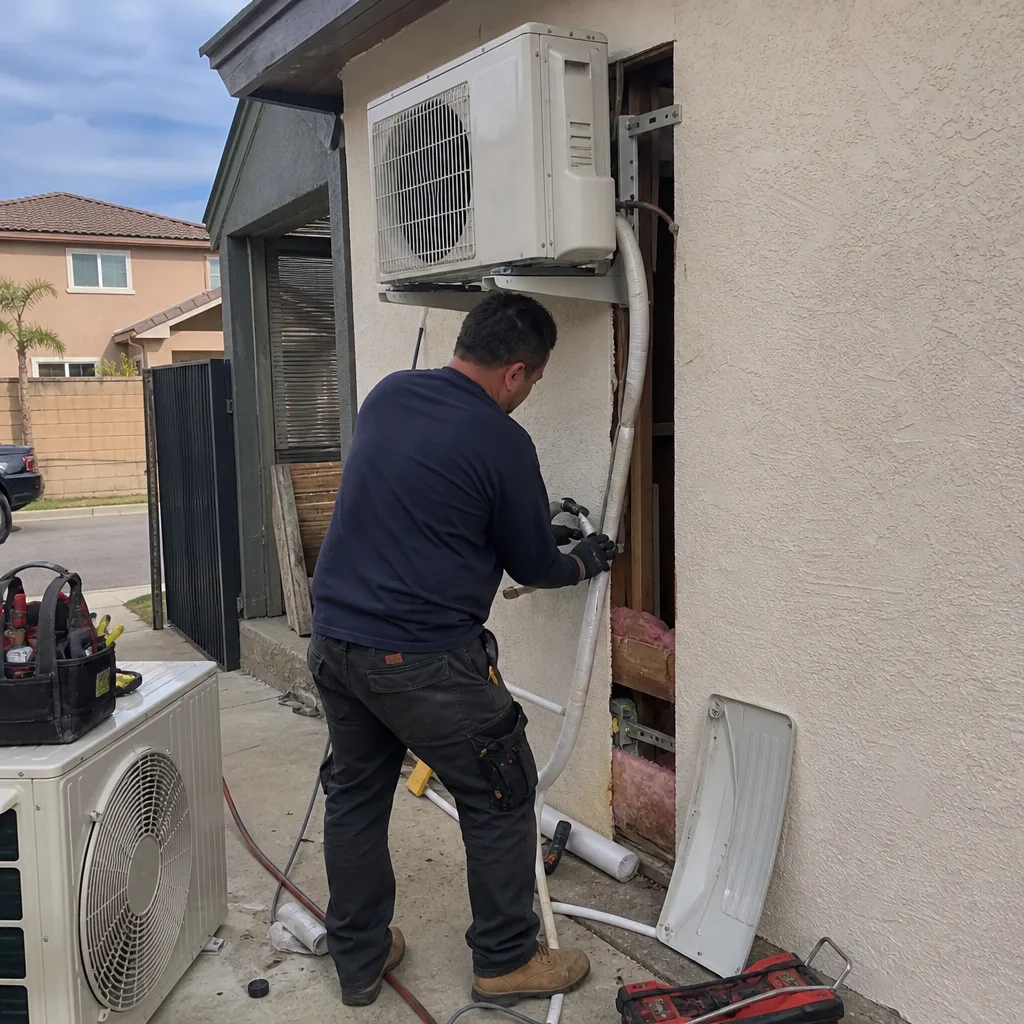
- HVAC: Installing a mini-split system requires a C-20 warm-air heating, ventilating, and air-conditioning license if the work involves refrigerant. Some small heat-pump manufacturers certify DIY installation, but the City of Torrance will still require a licensed contractor’s signature on the mechanical permit in most cases.
Here is the honest summary: an owner-builder in Torrance can legally paint, install flooring, hang cabinets and trim, set fixtures if the rough-in was done by a licensed plumber or electrician, and perform non-structural demolition. That is where DIY savings are real and low-risk. Everything else requires either a license you probably do not hold or a licensed subcontractor you will need to find, vet, schedule, and pay directly.
The Real Cost Offset: Labor Savings vs. Rework Risk
The number most homeowners are chasing is labor. On a Torrance ADU that a professional contractor would bid at $280,000 to $400,000 all-in, labor represents roughly 45 to 55 percent of the total. On paper, that looks like $125,000 to $220,000 in potential savings. In our experience, that paper savings is misleading for one reason: rework.
Rework is what happens when a framing inspection fails because a shear wall was nailed on the wrong schedule, or a plumbing rough-in gets red-tagged because the vent pipe was not sloped correctly. Rework means paying a licensed subcontractor to tear out what was done wrong and do it again. It also means a delay of two to six weeks while the correction is scheduled, inspected, and approved. During that time, you are not collecting rent, which in Torrance runs $2,200 to $3,400 a month for a one-bedroom ADU depending on the neighborhood and finish level. Six weeks of lost rent at $2,800 a month is $4,200. Two inspection failures gets you to $8,400, and you have not yet paid for the rework materials or the subcontractor’s time.
Compare that to the professional path. A contractor who builds ADUs in Torrance regularly prices the job in writing before work starts, schedules inspections as a routine part of the calendar rather than a surprise, and carries workers’ compensation insurance so an injury on site does not become a claim against your homeowners policy. The absence of that insurance is an overlooked cost of the owner-builder path: when you act as your own GC, an injury to a worker you hired can fall on your personal liability policy, which most homeowners policies cap at low limits for construction activity.
How Owner-Built ADUs Affect Resale, Title, and Refinancing
Lenders and title companies treat ADUs the way they treat any other structural improvement: they want to see permits, inspection sign-offs, and a certificate of occupancy. That is the baseline. An ADU built with a closed permit under an owner-builder arrangement can read as legitimate on resale if the documentation is complete. The problem is that owner-built projects in Torrance are more likely to have gaps in that documentation than contractor-built projects.
Here are the specific ways an owner-built ADU can hurt you downstream:
- Title insurance: When you sell, the buyer’s title company will search for open permits and code violations. An open permit, a missing final inspection, or a red-tag that was never resolved can stall closing. In some cases, the title company will list the ADU as an exception on the buyer’s policy, which means the buyer owns the property but has no title coverage for the ADU. Buyers walk away from that.
- Refinancing: The HomeStyle Renovation and CHOICERenovation programs and most cash-out refinance products require the appraiser to verify permits for any accessory structure. An unpermitted ADU is not counted in the appraised value at all, which means the equity you thought you had may not exist for underwriting purposes. If you built the ADU to add value and then try to refinance, an open permit will stop the loan.
- Insurance claims: If an unpermitted ADU has an electrical fire or a water leak that damages the main house, the insurer can deny the claim on the grounds that the structure was not built to code and was not disclosed. You are then personally liable for the damage to your house and possibly to adjacent properties.
- Disclosure obligations: California Civil Code requires sellers to disclose all material facts about the property, including unpermitted work. You must disclose an unpermitted ADU. Doing so alerts every buyer to a negotiating weakness; failing to do so creates a post-sale lawsuit claim.
Against that, consider what you get when a professional contractor builds your ADU in Torrance. You get a permit history that is complete, trade inspections that are signed off, a certificate of occupancy that closes the file, and a contractor who carries liability and workers’ compensation coverage. That documentation is what a lender, a title company, and a buyer all want to see. ADU Builders in Torrance who work to The Garrison Code produce exactly that paper trail: show up in the window, price in writing, by the book, leave it clean, stand behind it for a year.
Where a Competent Homeowner Adds Real Value
This is not an argument that every homeowner should write a check and stay out of the way. If you are a competent DIYer, there are specific phases of an ADU project in Torrance where your labor genuinely reduces cost without creating legal or financial risk. Here is the full list, in order of how much value you can add:
- Interior demolition (non-structural): Removing old drywall, flooring, or cabinetry from an existing garage you are converting. This is legal, low-risk, and requires no license. Torrance homeowners save $3,000 to $8,000 doing their own demo.
- Painting: Interior and exterior painting on an ADU is fully within owner-builder rights. A professional paint job on a 600-square-foot ADU runs $4,500 to $9,000 in Torrance; a careful homeowner can do it for $1,200 to $2,500 in materials.
- Flooring installation: LVP, laminate, and engineered hardwood are installable by a homeowner with some patience. This saves $3,000 to $7,000 depending on the square footage and material. It requires no permit and no license.
- Cabinet and trim installation: Hanging pre-made cabinets, installing baseboards, casing windows, and running crown molding are finish carpentry tasks with no license requirement. Savings: $4,000 to $10,000.
- Landscape and hardscape around the ADU: Grading, walkway pavers, and plantings are unpermitted work in most Torrance residential zones. A landscape contractor might charge $8,000 to $20,000; you can do the same job for $3,000 to $7,000 in materials and equipment rental.
The pattern here is clear: finish work is the sweet spot for DIY because it carries no license requirement, no structural risk, and no inspection risk that affects your certificate of occupancy. Rough-in, structural, and utility work does not belong in the same category.
Where Professional Work Is the Lower-Risk Choice
Now the other side of the ledger. There are phases of an ADU project where professional work does not just add convenience, it removes risk that you cannot see clearly when it is still on paper. In our experience, these are the places where we have been called in to fix owner-builder projects in Torrance:
- Foundation and slab work: A 600-square-foot ADU sits on a concrete slab that must be flat within 1/4 inch over 10 feet, reinforced to the engineered spec, and protected against soil movement. Torrance has areas of expansive soil in the northern parts of the city near the 405 corridor. A slab poured without proper moisture barrier or reinforcement will crack, and the crack will telegraph through your flooring within a year. Fixing a bad slab means demolition and re-pour, which costs $25,000 to $50,000.
- Framing and shear walls: An engineered plan for an ADU in Torrance will call out specific nailing patterns, hold-down hardware, and anchor bolts. The building inspector checks these against the plan. A failed framing inspection adds two to four weeks to your schedule and requires a corrective engineer’s letter in some cases.
- Electrical service and panel work: Most Torrance ADUs need a subpanel or a service upgrade. This is a C-10 licensed task, period. Working on a main panel without a license is also genuinely dangerous. A miswired neutral or an undersized conductor can start a fire that your insurer will not pay for if the work was unpermitted.
- Plumbing undergrounds and sewer connections: Connecting a new ADU to the sewer lateral requires a permit, a licensed plumber, and in some Torrance neighborhoods, coordination with the City’s sewer section. A bad slope on a 3-inch drain line will back up intermittently for years before you find it. The repair requires cutting through your slab or trenching through your yard.
The rule we use with homeowners is simple: if the work is buried, hidden, or will hold a load, it belongs with a licensed professional. If the work is cosmetic and removable, DIY is a reasonable risk. That line is not a sales pitch; it is the same line the City of Torrance draws in its permit and inspection requirements.
The Prefab Path: A Middle Ground Worth Understanding
There is a third option in Torrance that sits between full DIY and full conventional construction, and it deserves its own section because it changes the cost and risk equation. Prefab and modular ADU platforms like Abodu, Cover, and Dvele manufacture ADU modules in a factory and deliver them to your site on a truck. The structure is built under factory quality control, which means the framing, electrical rough-in, and plumbing rough-in are completed before the unit ever reaches your lot, but you’ll still need seasonal ADU care in Torrance once it’s installed. That removes the schedule risk of framing an ADU outdoors in Torrance’s June gloom or planning around the rainy season that shows up unexpectedly in January.
The catch is that a prefab ADU still requires site work that a factory cannot do for you. You need a foundation, utility trenching, a sewer connection, and sometimes a service panel upgrade. That site work is permitted and inspected by the City of Torrance just like a conventional build. Some homeowners use a hybrid approach: they buy the prefab unit directly, act as owner-builder for the site prep, and hire the manufacturer’s installation crew or a local contractor for the set and connection. That approach can work, but it requires the same owner-builder occupancy certification in Torrance as any other path, and it requires you to coordinate the utility connections between the factory’s specifications and the City’s requirements.
We work with Abodu, Cover, and Dvele because they are the platforms Torrance homeowners ask about most, and the right answer depends on your lot, your budget, and your timeline. A factory-built ADU that takes six months total can be a better financial decision than a DIY build that takes 18 months, even if the sticker price is higher. The rental income you are not collecting during a slow build is a real cost. In Fielding ADU Torrance home territory, a one-bedroom ADU rents for $2,500 to $3,200 a month, and a 12-month delay is $30,000 to $38,000 you will never recover.
Torrance Permitting: The Step-by-Step Reality
Here is what the permit process in Torrance actually looks like for an ADU, whether you are an owner-builder or working with a contractor. This is the sequence the City requires, and it is worth understanding before you decide which path to take:
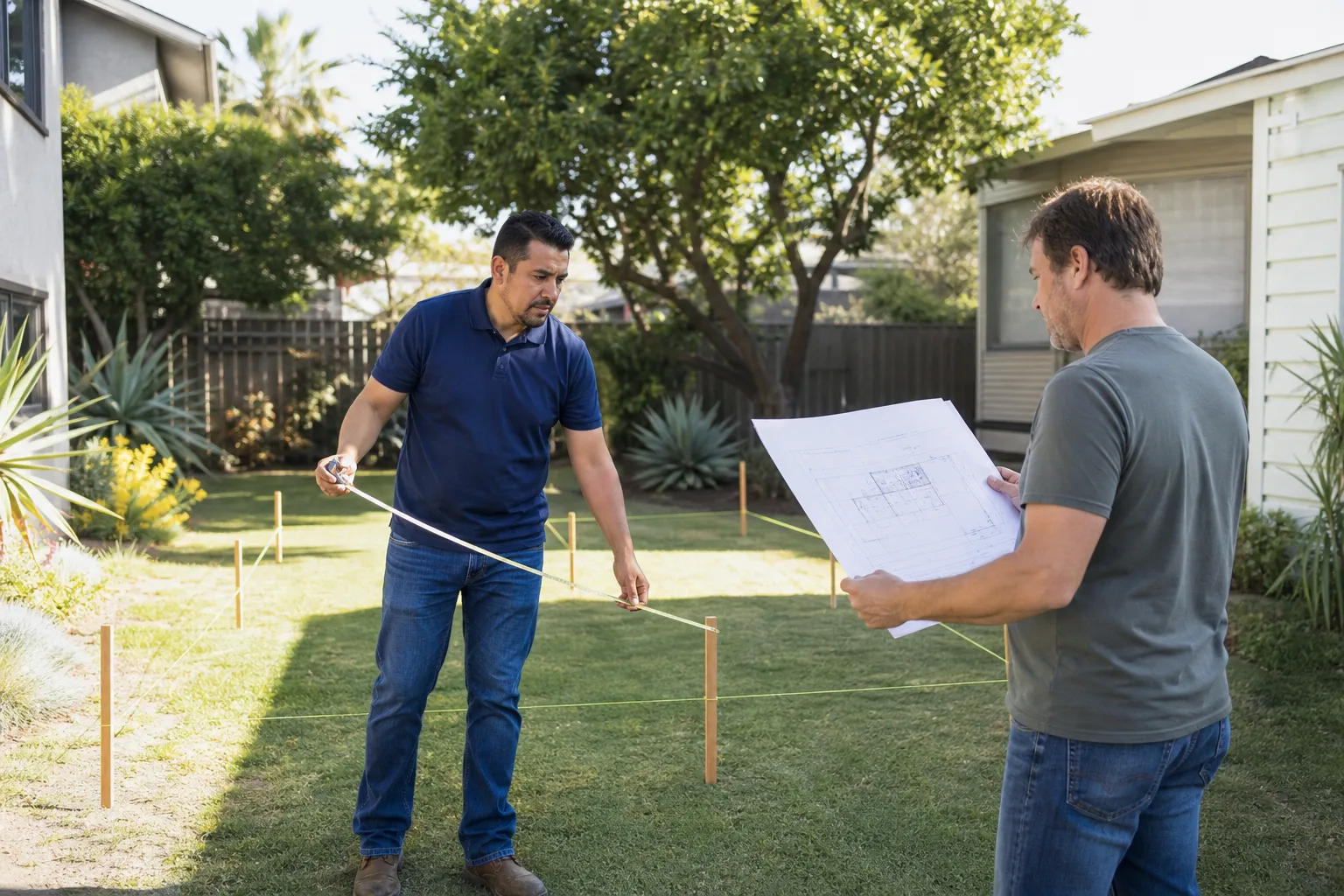
- Pre-application review (optional but recommended): The Torrance Planning Division will review your property’s zoning, lot dimensions, and existing structures before you commit to drawings. This step catches problems like a required setback variance early, when it costs nothing to fix. Fee: under $200.
- Plan submission: Complete architectural drawings, site plan, foundation plan, structural calculations, and energy compliance documents. Torrance uses the California Energy Code Title 24, and your ADU must meet the 2022 or 2025 energy standards depending on when you submit. Plan check fee: typically $2,000 to $5,000 for an ADU.
- Plan check review: The City has up to 60 days by state law to complete the first plan check for an ADU. Corrections add time. A professional designer who knows Torrance’s reviewer preferences often gets first-pass approval, which saves four to eight weeks.
- Permit issuance: Once plans are approved, you pay the permit fee and receive your permit set. The permit fee for a Torrance ADU typically runs $8,000 to $18,000 depending on square footage and valuation.
- Construction and inspections: Foundation, framing, shear wall, rough electrical, rough plumbing, insulation, drywall, final electrical, final plumbing, mechanical, and final building. Each inspection requires the work to be visible, which means you cannot cover framing until the framing inspector signs off.
- Certificate of occupancy: The final step. The City issues this when all inspections have passed and all fees are paid. A tenant cannot legally occupy the ADU until this certificate is in hand. Renting before the certificate of occupancy is a code violation in Torrance.
One thing worth stating plainly: the City of Torrance does not care whether you are an owner-builder or a contractor. The inspection standard is the same. The difference is that a contractor has already passed hundreds of the same inspections and knows what triggers a red tag, while an owner-builder is meeting each one for the first time.
Common Mistakes to Avoid
- Starting without a pre-application review. Torrance zoning for ADUs includes overlay districts and historical areas where setbacks and height rules differ. Building a set of plans before verifying your lot’s zone is a known way to lose $3,000 to $8,000 in design fees on a plan the City will not accept.
- Signing the owner-builder occupancy certification while planning to rent. That certification is a sworn statement. If you sign it and rent the ADU within 12 months, you have created a factual record of misrepresentation that can surface during any future dispute.
- Acting as your own electrician. California does not allow an owner-builder to perform electrical work without a C-10 license. Torrance inspections will catch it, the red tag will stop your project, and you will pay a licensed electrician to redo the work anyway.
- Covering work before the inspection is signed off. Insulation and drywall hide framing, electrical, and plumbing. If you close a wall before the rough inspection, the inspector will require you to open it. That is a two-week delay and a materials cost you eat twice.
- Using a “cash deal” subcontractor without a written scope. Subcontractors who will work for cash without a contract are also the most likely to disappear mid-job. On an owner-builder project, you are the general contractor, which means you bear the full cost of an unfinished trade.
- Renting the ADU before the certificate of occupancy. A tenant who occupies an unpermitted ADU can bring a habitability claim in California, and in some cases recover moving costs and rent. This is an avoidable legal risk that turns a $2,800-a-month rental into a liability.
When to Call a Professional
Call a professional when the ADU work touches the foundation, the structure, the electrical service, or the sewer line, because those are the systems where a mistake is expensive to uncover and expensive to fix. Call a professional when the City has flagged a correction to your plans that you do not fully understand, because the review window is not forgiving. And call a professional when you want a written price for the work before any of it starts, so the number you approve on day one is the number on the final invoice. Fielding ADU Torrance offers free estimates in Torrance; call (424) 358-3068 and ask for a written quote on your ADU or garage conversion in Torrance.
Frequently Asked Questions
Yes, California owner-builder law allows a property owner to act as their own general contractor in Torrance, but you must sign a certification that you will occupy the dwelling for 12 months after the certificate of occupancy. That requirement makes DIY ADU construction incompatible with building the unit specifically to rent or sell, and the City enforces the certification as part of the permit. Electrical, plumbing, and structural work must still be done by California-licensed trades. Call (424) 358-3068 if you want a written estimate instead, or to understand how the rules apply to your specific property.
A professionally built ADU in Torrance typically costs $280,000 to $400,000 all-in, including permits, drawings, site work, construction, and finish; a garage conversion runs $120,000 to $220,000 in most cases. The Torrance-specific factors that move the number are soil conditions in the northern part of the city, the seismic design requirements that add engineered hardware to the frame, and the City’s permit fees. An owner-builder can reduce the labor line item by doing finish work, but the rough-in and structural costs remain relatively fixed. Call (424) 358-3068 for an exact quote with a written price before any work starts.
Yes, an unpermitted ADU in Torrance will reduce your property’s sale value and can derail a transaction entirely when the buyer’s title company identifies the open permit or missing certificate of occupancy. California law also requires you to disclose unpermitted work, which creates a negotiation point against you before you even list the house. Permitted work with a clean inspection history, by contrast, adds sellable square footage that an appraiser can verify. Get the permit closed through a professional who will walk the file through to the certificate.
You can legally do non-structural finish work on your own ADU in Torrance as an owner-builder: painting, flooring, cabinet installation, trim work, interior demolition, and landscaping around the unit. You cannot do electrical, plumbing, HVAC, or structural framing yourself unless you hold the corresponding California specialty license. That line is where DIY savings end and professional work becomes the lower-risk financial choice.
From design start to certificate of occupancy, a Torrance ADU takes six to 14 months on average; plan check alone runs 30 to 60 days for the first review, and construction runs four to eight months depending on the build method. Prefab platforms like Abodu, Cover, and Dvele can shorten the construction phase to three to six months because the module is built in a factory while site work runs in parallel. A garage conversion is generally faster than a new detached ADU because the structure already exists. Call (424) 358-3068 to get a realistic schedule for your room addition in Torrance or ADU based on your property and scope.
The Garrison Standard covers every ADU, garage conversion, and room addition built by Fielding ADU Torrance with a written one-year guarantee: if something we built fails within 365 days of completion, we return at no charge and correct the defect. The guarantee is spelled out on paper, including exactly what it covers and how it works, and the write-up accompanies the written price you receive before any work starts. Most contractors do not put that promise in writing at all.
The Bottom Line
The DIY-versus-professional decision on a Torrance ADU comes down to three questions: what will the City permit you to do, what will the ownership certification allow you to do with the building, and what will a future buyer, lender, or insurer accept. If you want to rent the ADU or sell the property, the owner-builder path is legally closed to you. If you want to do finish work yourself and hire licensed trades for the rest, that is a reasonable route for a patient, organized homeowner. If you want a permitted ADU with a written price, a closed file, and a one-year guarantee in writing, that is what Fielding ADU Torrance does. For more guides & resources on ADU planning and construction, explore our blog. Call (424) 358-3068 for a free estimate and a price you can hold us to.
Written by Reed Calloway, Owner at Fielding ADU Torrance, serving Torrance since 2006.