Title 24 Energy Compliance in Torrance, CA
Title 24 energy compliance in Torrance means your ADU or room addition meets California’s mandatory energy efficiency standards before the city will sign off on the permit. For most Torrance homeowners, this means a series of calculations, inspections, and documentation that prove your new living space is insulated correctly, has the right windows, and won’t strain the grid on hot August afternoons. We handle every part of it. That includes the HERS testing, the CF-1R forms, the CF-2R field verification, and the final CF-3R that goes to the city. You can reach us at (424) 358-3068 if you want to know whether your specific project will need it. Short answer: if you’re building an ADU or adding conditioned square footage in Torrance, yes, it will.
Most of the Title 24 work we do comes bundled inside our ADU Design & Permitting service. The energy compliance piece rarely stands alone. It’s the check that runs alongside your architectural plans, your structural engineering, and your permit submittal. We run it as its own discipline because it has its own deadline, its own inspector, and its own way of failing a project if nobody is paying attention.
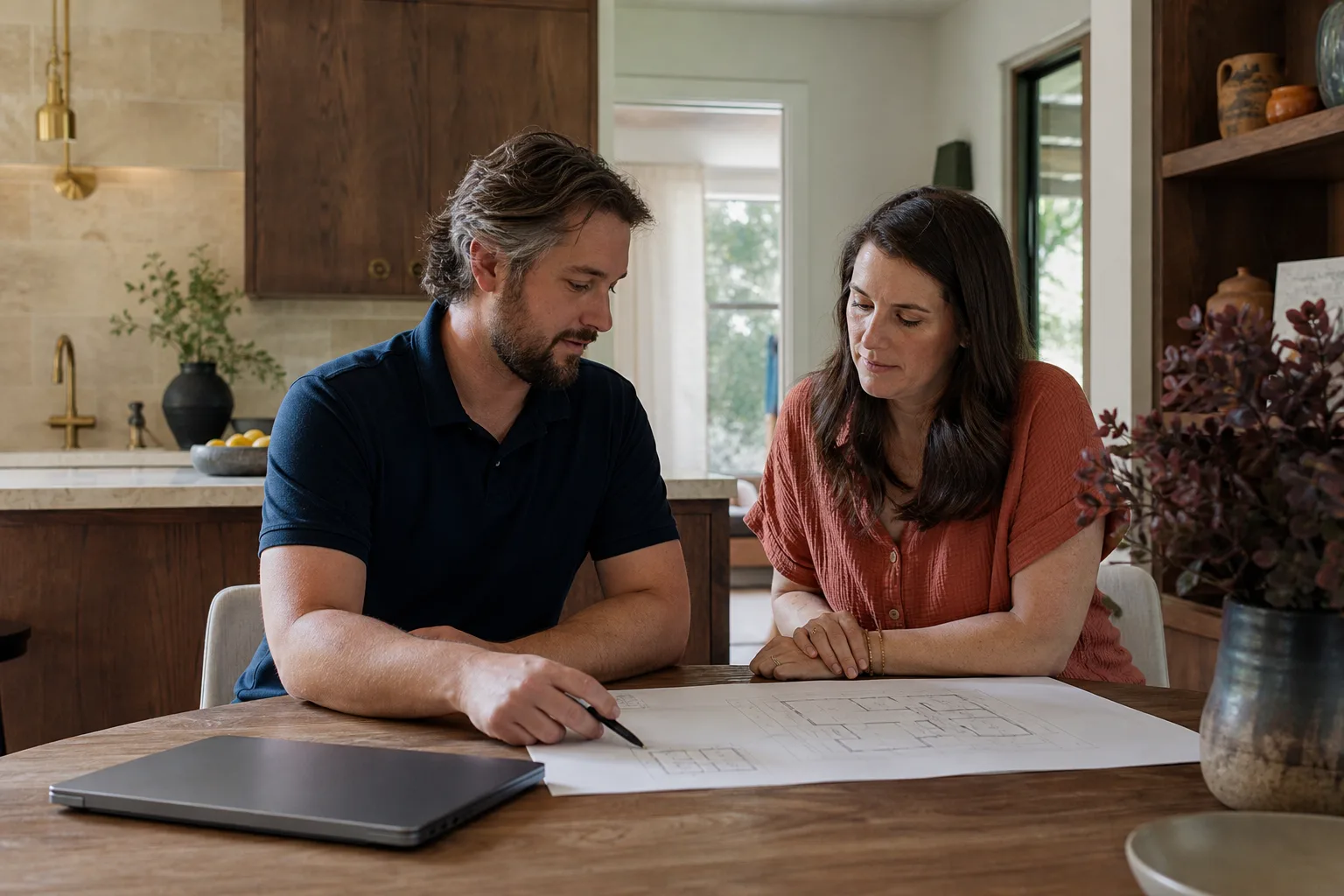
When You Need Title 24 Energy Compliance
Not every project in Torrance triggers full Title 24 compliance, but most of the ones we build do. Here are the situations where you’ll definitely need it:
- You’re building an ADU – Every attached or detached accessory dwelling unit in Torrance requires Title 24 documentation as part of the permit package. No exceptions. The city’s planning department won’t take the application without the energy calcs.
- You’re converting a garage into living space – A garage conversion in the South Bay changes an unconditioned space into a conditioned one. That triggers insulation requirements, window ratings, and a HERS verification before final sign-off.
- You’re adding a bedroom or bonus room – Any addition over a certain square footage that changes the building’s conditioned footprint puts you into Title 24 territory. The watts-per-square-foot lighting rules and the envelope requirements apply to the new space.
- Your plans got kicked back from the Torrance permit counter – We get calls from homeowners who submitted plans on their own and got a correction notice asking for CF-1R forms or a registered design professional’s energy signature. We fix that. Same week, usually.
- You’re replacing windows or a roof as part of a larger remodel – Some remodels trigger Title 24 on the altered components. If you’re already pulling permits for a structural change in the Hollywood Riviera or Old Torrance, the energy requirements usually ride along.
- You’re installing or upgrading HVAC, water heating, or solar – Title 24 doesn’t just cover insulation. It covers mechanical systems, water heating, and photovoltaic sizing. If your ADU has a mini-split and a tankless water heater, both get checked.
If you’re not sure whether your project triggers compliance, call us. It takes about five minutes to determine. And if the answer is no, we’ll tell you that too. We don’t sell paperwork you don’t need.
Our Title 24 Energy Compliance Process
Title 24 has a reputation for being a paperwork headache. It doesn’t have to be. We’ve run enough Torrance projects through it that the process is predictable. Here’s what happens when you work with us:
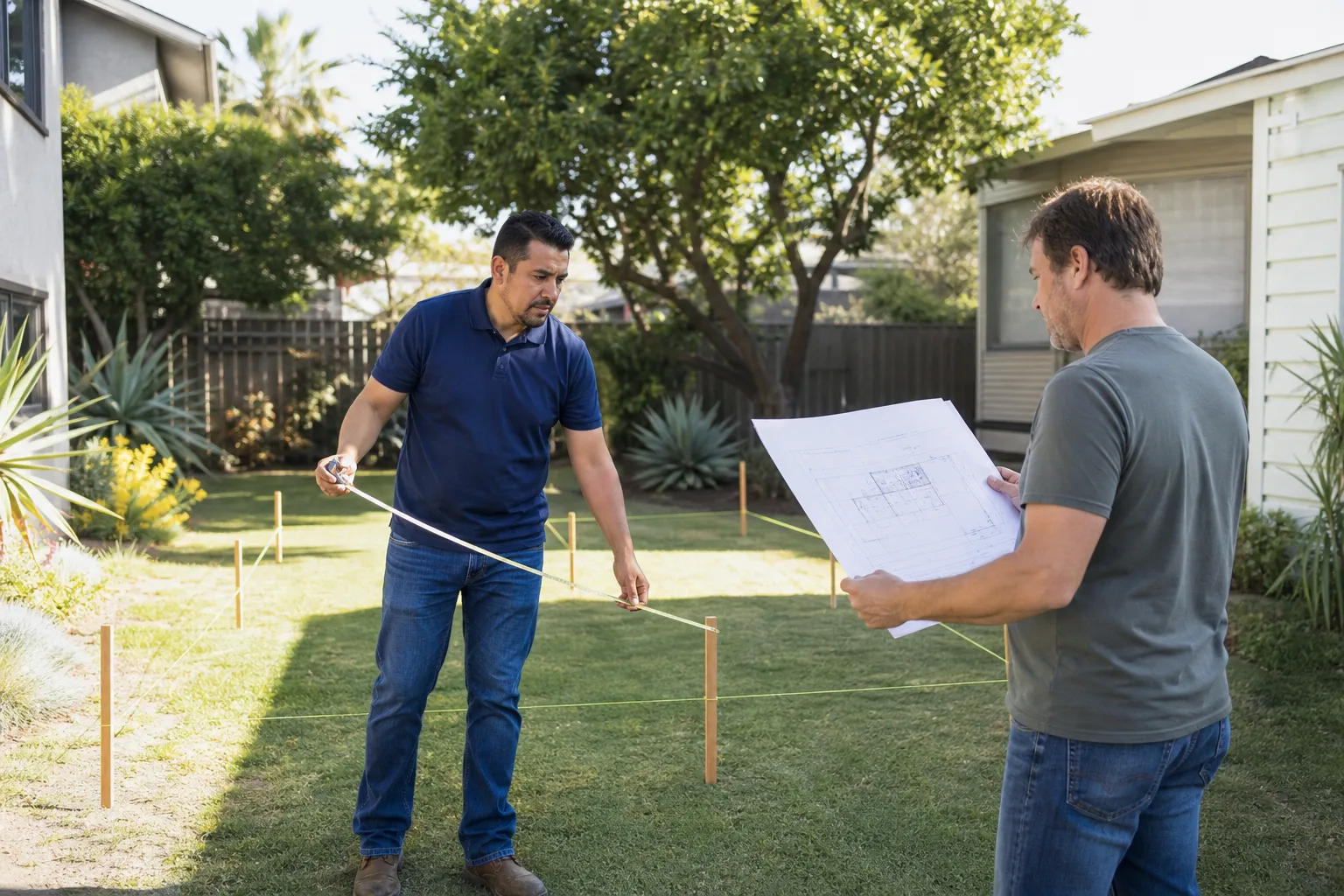
- We review your project scope and plans. Before any energy work starts, we look at what you’re building, where on the lot it sits, which direction the windows face, and what mechanical systems you’re planning. If we’re also doing your ADU Design & Permitting in Torrance, this happens during design so the energy requirements shape the plans rather than fight them.
- We run the energy model. Our energy consultant models the structure using state-approved software. The model tells us exactly what R-value your insulation needs, what U-factor and SHGC your windows require, and whether your lighting meets the mandatory wattage budget. The output is the CF-1R certificate that goes on the plans.
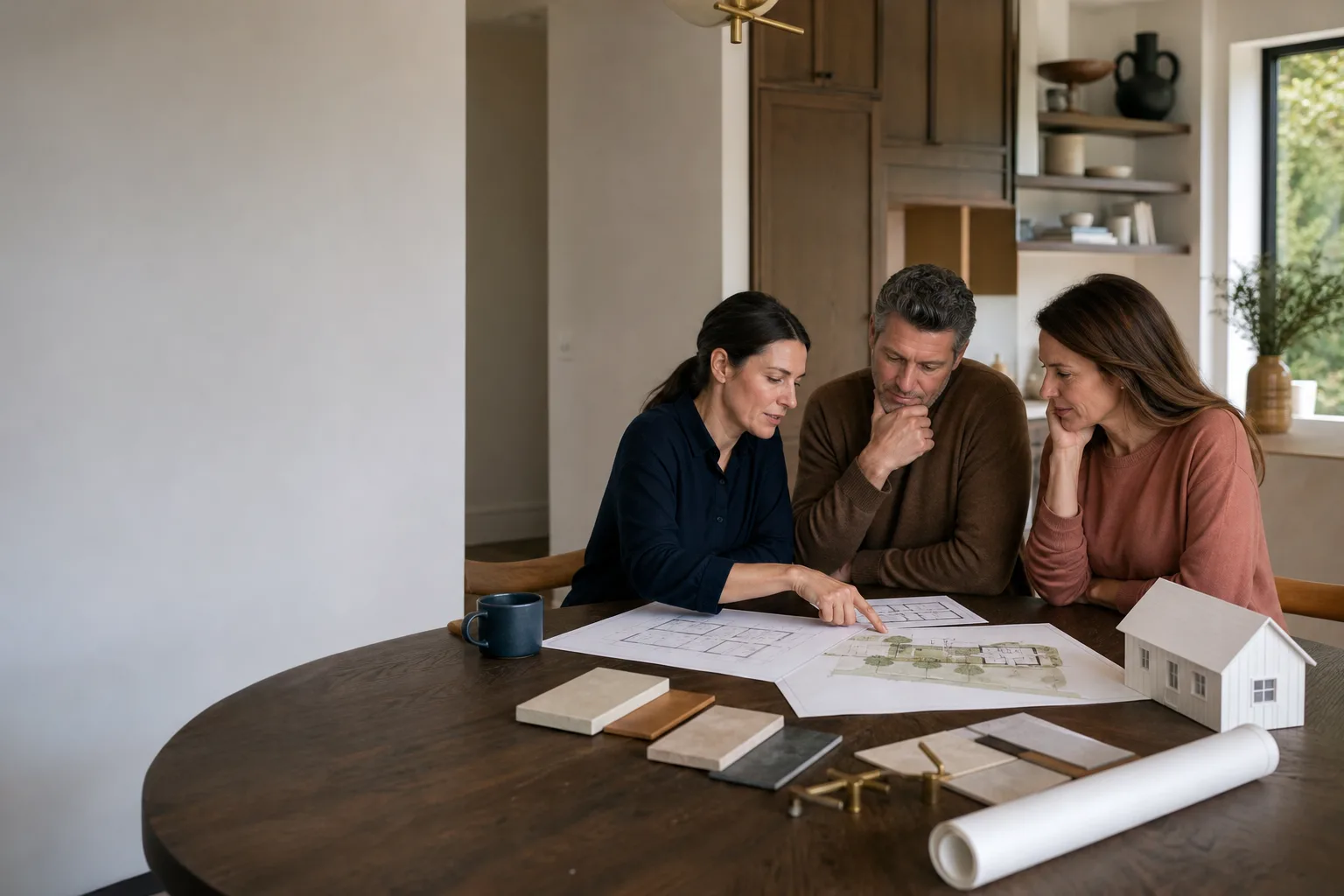
- We fold the requirements into the construction documents. This is where a lot of projects fall apart: the energy calcs say one thing, the plans say another, and the inspector catches it at framing. We make sure the plans, the specs, and the energy certificate all say the same thing before the permit goes to the city.
- We coordinate field verification. Once the building is insulated and the mechanicals are in, a certified HERS rater comes out to verify that what’s installed matches what was modeled. They check the attic insulation, the duct sealing if applicable, the window labels, and the water heater efficiency. We schedule it. We make sure it passes.
- We file the CF-2R and CF-3R. The rater signs off on the field verification, we register the compliance documents with the state, and the final CF-3R goes to the Torrance building department. Your inspector sees the energy file is complete, and the permit moves to close-out.
- We hand you the full file. You get a copy of everything: the compliance certificates, the rater’s report, the final registration. If you ever sell the house, the buyer’s inspector may ask for it. You’ll have it.
That’s the whole discipline. No hidden steps, no surprise inspections you have to manage yourself.
Title 24 Energy Compliance Pricing in Torrance
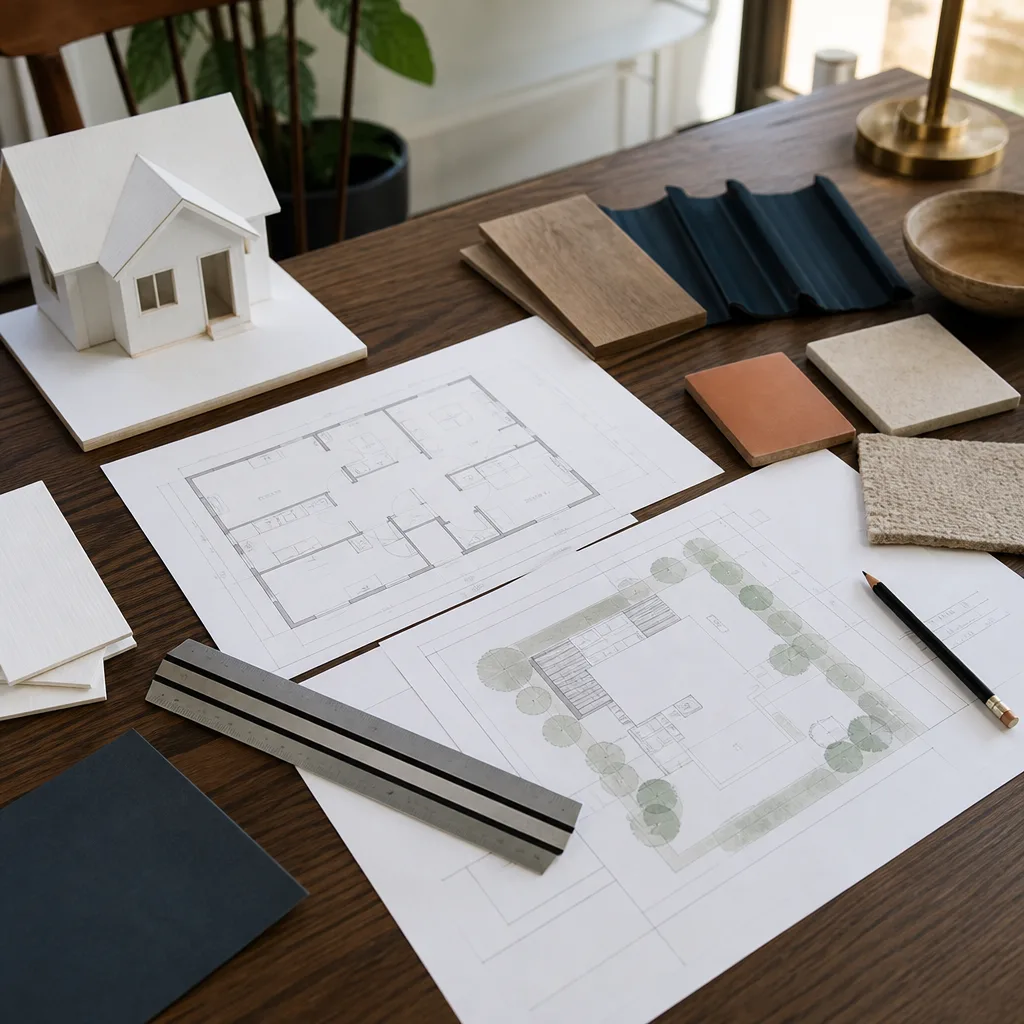
Here’s a direct answer: Title 24 energy compliance on a typical Torrance ADU or garage conversion runs between $850 and $2,200. That’s for the complete package – energy modeling, CF-1R certification, HERS field verification, and final CF-3R registration. If you’re only replacing windows or doing a small room addition, the energy piece may fall closer to $450 to $900.
Here’s what moves the number:
- Size and complexity of the structure. A 400-square-foot studio ADU is a straightforward model. A two-story 1,200-square-foot ADU with multiple orientation zones, skylights, and a mini-split system takes more modeling time and more field verification.
- Whether a HERS rater is required. Most new ADUs and conversions in Torrance require field verification by a certified HERS rater. Their travel time and inspection fee is a direct line item. Smaller remodels sometimes skip this step.
- What mechanical systems you’re installing. A single-zone ductless heat pump is simpler than a ducted system with multiple zones. If you’re combining an ADU build with solar, Title 24 also covers the photovoltaic sizing requirements under the state’s solar mandate for new construction. More systems, more verification.
- Whether we’re fixing a failed plan submittal. If you already submitted plans and the city rejected them for missing energy documentation, we have to reconcile what’s on the plans with what the energy model says. That can take a few extra hours. It’s usually faster than re-doing the architecture.
You’ll get the exact price in writing before any energy work starts. That’s the standard we work under, and it’s been the standard since 2006. The number you approve is the number you pay. No re-quote at the end, no “the energy consultant found something” upcharge. If the scope changes because you change the plans, we’ll re-price that change in writing before we proceed. Otherwise the number holds.
Every Title 24 compliance file we produce is backed by the same 365-day guarantee that covers our built work. If the city rejects the energy file due to our error, we correct it at no charge. If the HERS rater finds a discrepancy and it traces back to our modeling, we fix the model and re-coordinate the inspection on our dime. You’re not exposed to someone else’s mistake.
Want a hard number for your project? Call (424) 358-3068. We’ll ask a few questions about square footage, build type, and whether you’re doing prefab or conventional. Then we’ll give you a price. No site visit required for a Title 24 quote on most projects.
Title 24 Compliance for Prefab and Modular ADUs
If you’re building an ADU on a prefab or modular platform, Title 24 works a little differently. The factory systems often arrive with pre-certified envelope assemblies and mechanical packages. We work with the major platforms – Abodu, Cover, Dvele, and Mighty Buildings among them – and we know how to align their factory compliance documentation with what the Torrance permit office expects to see in the field.
Here’s the nuance that trips people up. A factory panel may be rated at R-21 from the manufacturer’s spec sheet. The city still wants a California-registered design professional to sign the energy compliance. Your prefab company’s documentation gets folded into our energy model, and the model produces the CF-1R that the city accepts. If the platform uses structural insulated panels or factory-installed glazing, we verify the labels during the HERS inspection and reconcile them against the model. The whole point is that your permit doesn’t stall because the city is asking for a form the factory never generated.
We’ve done this enough times on Torrance lots with restricted access – narrow side yards in Southwood, a tight footprint off Anza Avenue – that the prefab compliance path feels routine. Doesn’t mean we skip steps. Means we know which steps matter.
What Torrance Specifically Requires
Torrance follows California’s statewide Title 24 code, but the city’s plan review staff applies it strictly. We see fewer energy-related corrections from Torrance than from some neighboring cities, which tells us the review process is consistent. What we do see is enforcement timing: the energy documents need to be in the permit package at submittal, not added mid-review. If you submit plans without the CF-1R, you get a correction notice that can add two to three weeks to your timeline.
Some specifics that show up on Torrance projects:
- Cool roof requirements. Torrance sits in the coastal climate zone. Depending on your zone and the roof’s slope, Title 24 may require a minimum aged solar reflectance on the roofing material. For an ADU with a flat or low-slope roof – common on modern prefab designs – the cool roof standard applies.
- High-reflectance paving for site work. This one shows up on larger ADUs and additions with significant hardscape. Title 24 has requirements around site paving and shade cover that get checked on the plans. We catch it during the energy modeling phase so the landscape architecture doesn’t conflict.
- Indoor water consumption. Title 24 references CALGreen mandates on plumbing fixtures. Your ADU’s lavatory faucets, showerheads, and toilets all have to meet specific flow-rate maximums. It’s part of the compliance package and gets verified at final inspection.
- Demand-response thermostat requirements. New HVAC in a Torrance ADU has to come with a thermostat capable of responding to utility demand signals. Merely having a smart thermostat usually satisfies it, but the spec has to be right.
None of this is hidden. It’s all in the state code. But it’s the kind of detail that gets missed when someone treats Title 24 as a box to check rather than an integrated part of the design.
FAQs – Title 24 Energy Compliance
How much does Title 24 compliance cost in Torrance?
Title 24 compliance on a typical Torrance ADU or garage conversion runs $850 to $2,200 for the complete package: energy modeling, CF-1R certification, HERS field verification, and CF-3R registration. Smaller remodels like window replacements fall in the $450 to $900 range. Your exact price depends on the structure’s size, the mechanical systems, and whether a HERS rater is required. Call (424) 358-3068 for a written quote – no site visit needed for most projects.
Can you do Title 24 compliance the same week?
In most cases, yes. If your plans are ready, we can usually run the energy model and produce the CF-1R within five to seven business days. If you’re facing a permit deadline and the city has already kicked the plans back for missing energy documents, tell us when you call – we prioritize correction work and can often turn it around faster. Call (424) 358-3068 and we’ll tell you what’s realistic for your specific project.
Is it cheaper to skip Title 24 and deal with it later?
No. It’s more expensive. Every Torrance permit submittal that involves conditioned square footage without the energy compliance package gets a correction notice. That correction adds time – typically two to three weeks – and often means you’re paying a second plan-check fee and re-running the architectural prints with the energy annotations added. The energy compliance itself costs the same whether it’s done before submittal or after a rejection. The difference is that doing it first avoids the delay, the re-print cost, and the second round of plan review. It’s the cheapest part of the permit package to get right the first time.
Does Title 24 apply to a prefab ADU from Abodu or Cover?
Yes. Prefab and modular ADUs must meet the same Title 24 standards as site-built structures. The difference is that platforms like Abodu, Cover, Dvele, and Mighty Buildings arrive with factory documentation for their envelope assemblies, glazing, and mechanical systems. We fold that documentation into a California-compliant energy model and produce the CF-1R the Torrance permit office requires. If the factory’s specs don’t match what gets installed on your lot, the HERS verification catches it and we reconcile before final sign-off. You still need the paperwork; you don’t have to generate it yourself.
Who signs the Title 24 documents?
A California-registered design professional – typically a licensed architect or engineer – signs the CF-1R, and a certified HERS rater verifies the field conditions and signs the CF-2R and CF-3R. Our home services pull all of this together so you’re not coordinating between three different professionals. We handle the consulting, the modeling, the rater scheduling, and the final filing. You get a complete file at the end.
Why Fielding ADU Torrance for Title 24
Reed Calloway runs Fielding ADU Torrance. The company operates under the Garrison Standard: show up in the window, price in writing, by the book, leave it clean, stand behind it for a year. That standard has been in place since 2006, and it applies to the paperwork side of a project just as much as the framing side.
Our crew members are background-checked and uniformed, so you know who’s on your property. If you call at noon or midnight, a live person answers. There’s no voicemail queue. There’s no callback promise that evaporates.
For Title 24 specifically, the advantage is that we do the energy compliance inside the same shop that designs and permits the structure. The energy model informs the plans. The plans match the inspections. The inspections match the final filing. When the city wants a revision, it comes through us and gets fixed the same week. You don’t end up as the middleman between an architect, a consultant, and a rater who all want different things.
And if we get the compliance wrong – if the city rejects the file because of an error on our side – we correct it at no charge. The Garrison Standard covers the full year. If the HERS inspection fails due to a mismatch between the model and the build, we’re the ones who make it right, on our own clock.
If you’re building an ADU or adding space in Torrance and the Title 24 requirement is hanging over your head, call us. We’ll tell you what the compliance work involves, what it costs, and how long it’ll take. The estimate is free. The number goes in writing. The work gets done.
Contact Fielding ADU Torrance
Call (424) 358-3068 for a free Title 24 energy compliance quote.
A live person answers, 24 hours a day, 7 days a week. Written price before any work starts.
Written by Reed Calloway, Owner at Fielding ADU Torrance, serving Torrance.