Boxabl Site Prep & Utilities: The Torrance Owner’s Guide
Site prep and utility work for a Boxabl unit in Torrance typically runs $18,000 to $42,000 installed, depending on soil conditions, lot slope, utility trenching depth, and how far your service panel sits from the unit. We stock the common components on our trucks (utility stubs, conduit, water line materials, hold-down hardware) and can usually start your prep within a week of the written estimate. Most Torrance owners discover their site prep is inadequate the same way: the unit is delivered to a lot that was never properly compacted, or the utility rough-in is sitting in the wrong spot by a foot and a half because nobody rechecked the measurements against the Boxabl cut sheets.
We are an independent ADU and prefab contractor in Torrance, not affiliated with Boxabl. That matters because we tell you what the factory specs actually require, not what a sales brochure skims over.
Which Boxabl Models This Applies To
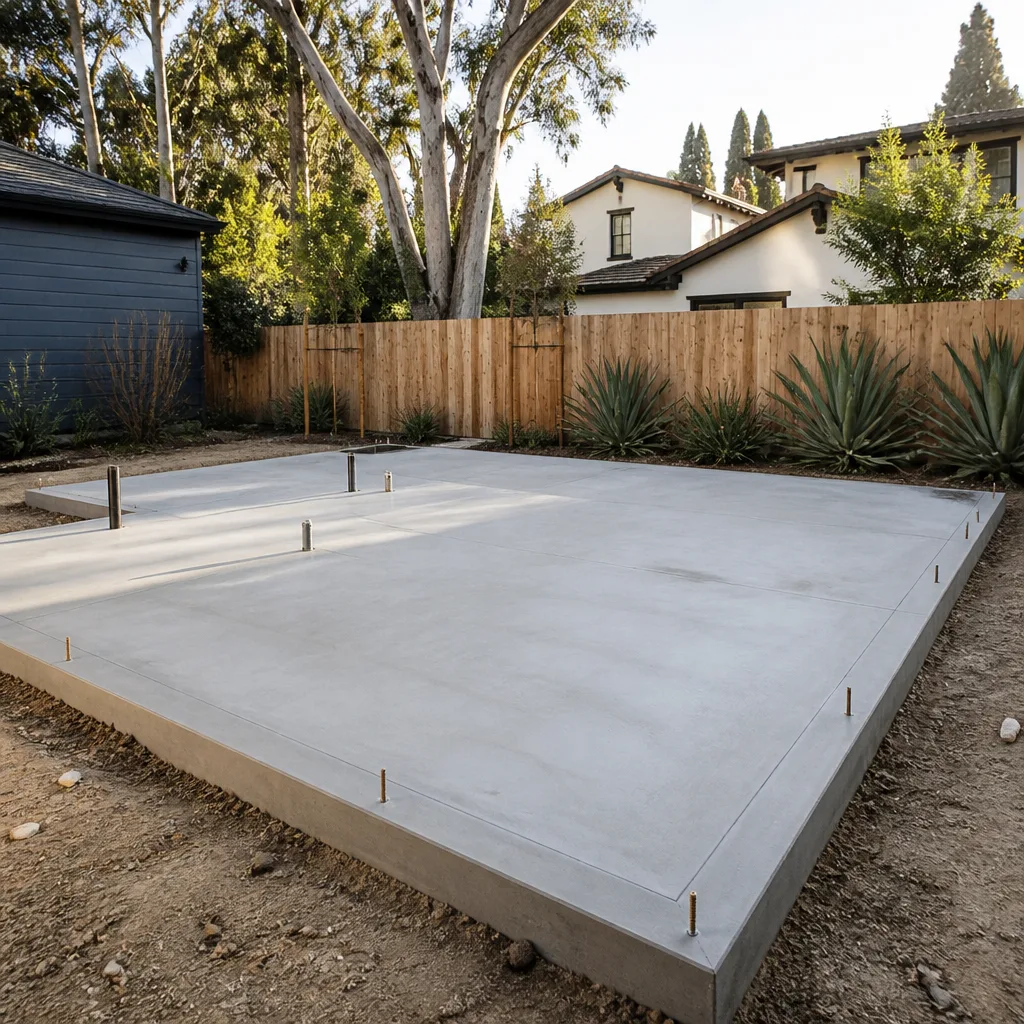
The site prep and utility requirements we handle apply to the Boxabl Casita, including the 20-foot and the larger layout variants that pair multiple modules. The key compatibility point is the under-floor utility chase. Your Boxabl unit expects water, sewer, and electrical connections to come up through the floor at specific coordinates, not through a wall or a random trench line. The factory ships a cut sheet with those coordinates. We have seen more than a few Torrance lots where the rough-in was placed using generic ADU assumptions, and the Boxabl arrived to find the sewer stub six inches off, which turns into chipping concrete or re-trenching on delivery day.
What we stock and install for Boxabl jobs includes:
- Electrical rough-in: conduit sized for a 60-amp to 100-amp subpanel feed, depending on your Boxabl’s equipment load. Torrance code requires the trench at 18 inches minimum with specific conduit fill calculations.
- Water service stub: 3/4-inch PEX or copper to match the Boxabl manifold location.
- Sewer lateral: 3-inch or 4-inch ABS, sloped at 1/4 inch per foot, connected to either the existing city sewer lateral or a new cleanout.
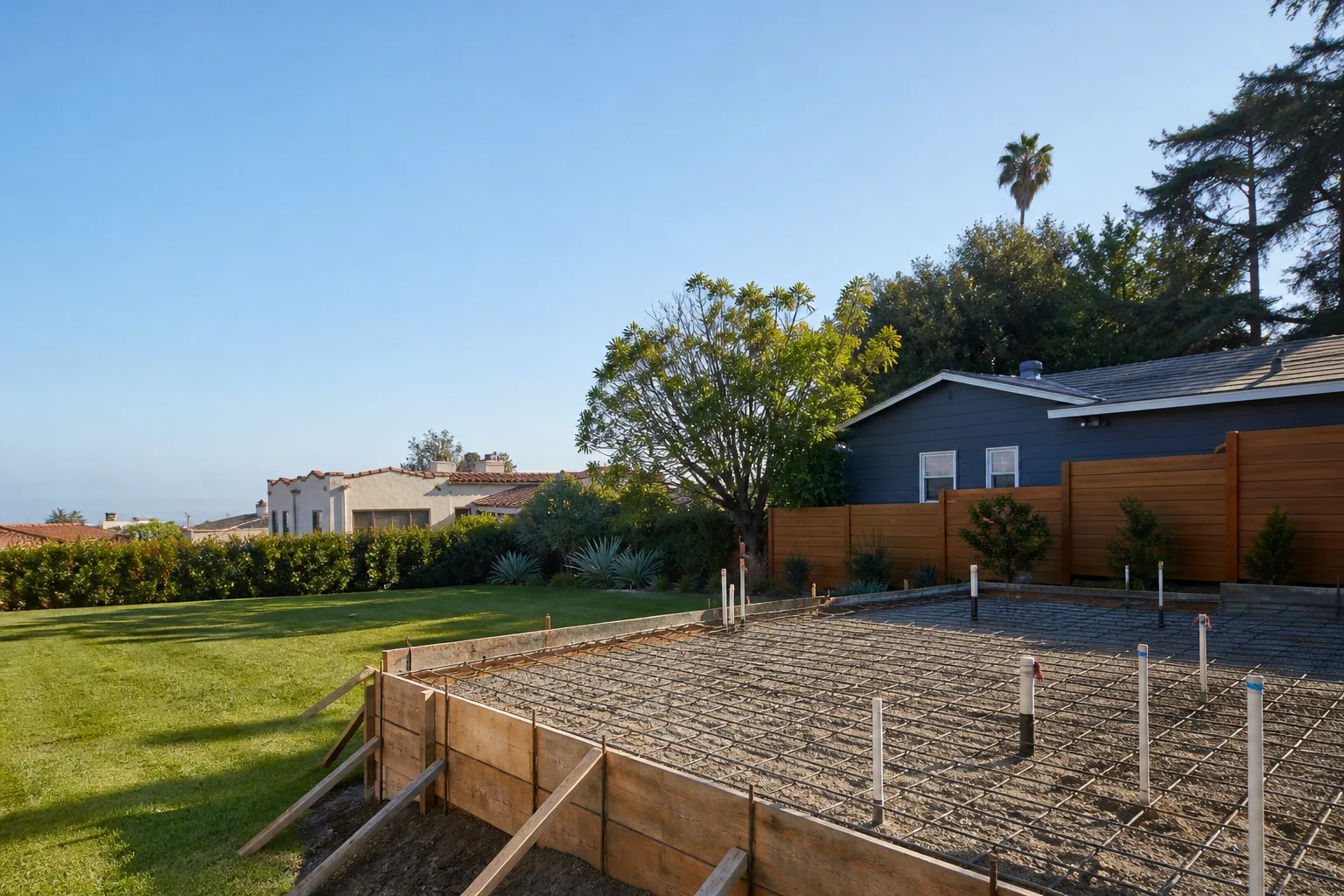
- Foundation pad or piers: engineered per Torrance soil reports. South Bay clay shifts with moisture, and a pad that looks flat in August can move by March.
- Hold-down and anchoring hardware: matched to the Boxabl tie-down pattern, not generic mobile home anchors.
The aftermarket versus OEM question does not really apply to site prep the way it does to a part. No one sells a “Boxabl” conduit or a branded sewer stub. What matters is that the materials meet Torrance building code and the factory installation tolerances. That is the standard we work to on every prefab platform we install, including Abodu, Cover, and Dvele units, and it applies the same way to a Boxabl Casita.
Signs Your Boxabl Site Prep & Utilities Are Failing
- Water pools around the unit after rain. Torrance gets 12 to 14 inches of rain a year, mostly between November and March. If the pad was not graded correctly or compacted properly, water sits against the skirt and eventually finds its way under the floor assembly. Moisture wicks into the structure and you get musty odors first, then rot.
- The electrical panel trips when both the mini-split and the water heater run. This usually means the feed was undersized for the actual load of a Boxabl with both appliances cycling. A 60-amp feed might meet the letter of the spec while struggling with the real-world startup draw.
- Sewer smells near the unit or slow drains from day one. A sewer lateral with the wrong slope, or one that was backfilled with rocks against the pipe, will drain slow and trap solids. That smell is the symptom; the cause is a lazy trench.
- Gaps opening between the unit and the pad, or doors that stick seasonally. Clay soil in Torrance expands and contracts with moisture. If the foundation was not engineered for that movement, the unit settles unevenly. You see it in the doors first.
- Low water pressure that no fixture can fix. A kinked or undersized supply line, or a line run through a trench that was not sand-bedded, can crack or crimp under the weight of the backfill. The pressure drops before you ever notice the leak.
Replacement Cost & What’s Included
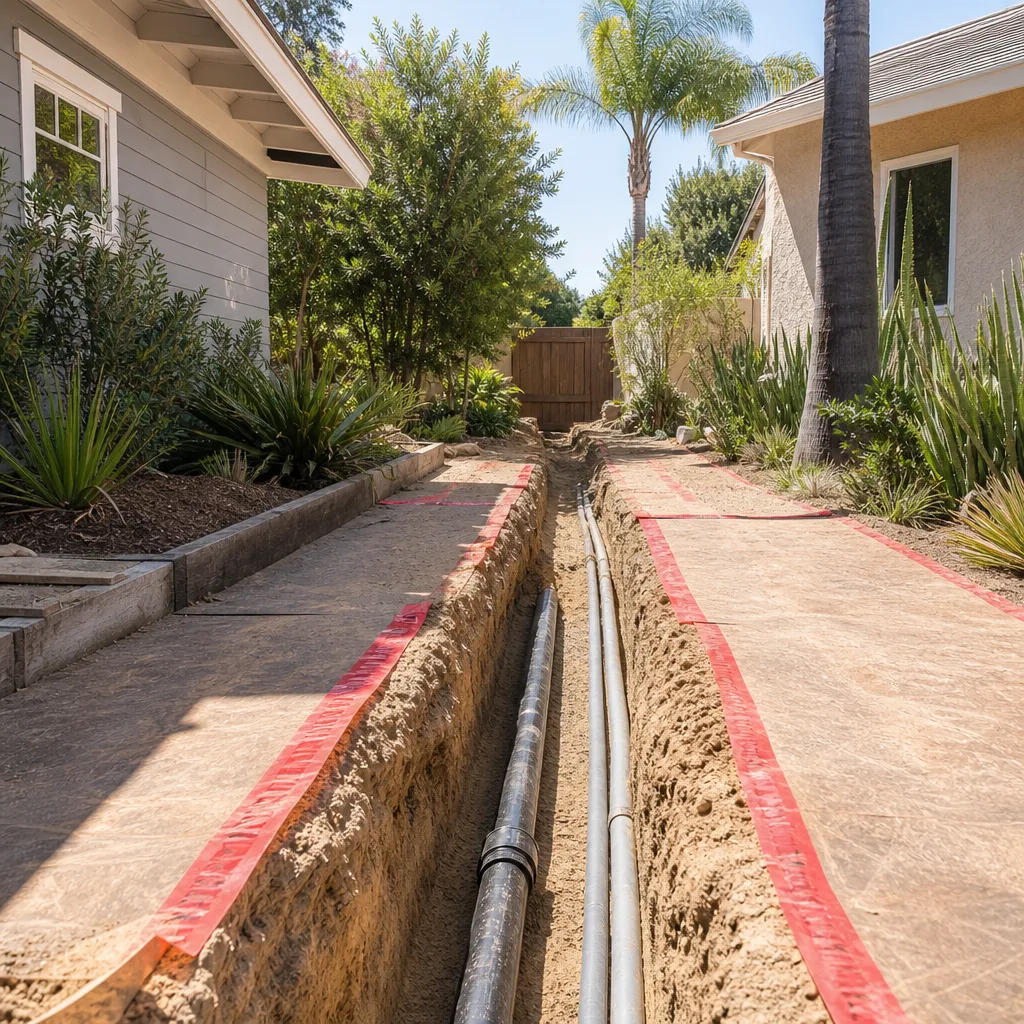
Here is what site prep and utility work actually costs in Torrance when we price it, since a written price before work starts is how we operate. These ranges assume a standard 20-foot Casita footprint on a reasonably flat lot with a sewer lateral within 40 feet of the stub.
- Foundation pad, formed and compacted: $7,000 to $14,000 depending on soil report requirements and access.
- Foundation piers with seismic tie-downs: $5,000 to $9,000 where a pad is not required or where the lot slopes.
- Electrical trench, conduit, and subpanel feed: $3,500 to $7,500 depending on panel distance and whether you need an upgraded main panel.
- Water and sewer rough-in plus connection: $2,500 to $6,000 depending on lateral depth and whether the city sewer tap is accessible.
- Grading, drainage, and compaction: $1,500 to $4,000 for standard flat work; more if you have a slope to manage.
Every line item goes in writing before we start. The price we agree on is the price on the final invoice. The work is covered by our one-year written guarantee under The Garrison Standard: if something we installed fails inside 365 days, we come back and correct it at no charge. The Garrison Code is how Reed Calloway runs every Fielding ADU Torrance job: show up in the window, price in writing, by the book, leave it clean, stand behind it for a year. Put it in writing, then build what it says.
DIY or Call Us?
Utility trenching and foundation work on a Boxabl in Torrance is not a weekend project. Digging an 18-inch electrical trench by hand through South Bay soil is a good way to meet a shovel you will hate by hour three, and the moment you touch a live panel or a sewer lateral, you are past what a homeowner should safely handle. We have corrected enough DIY site prep to know that the repair usually costs more than the original hire would have.
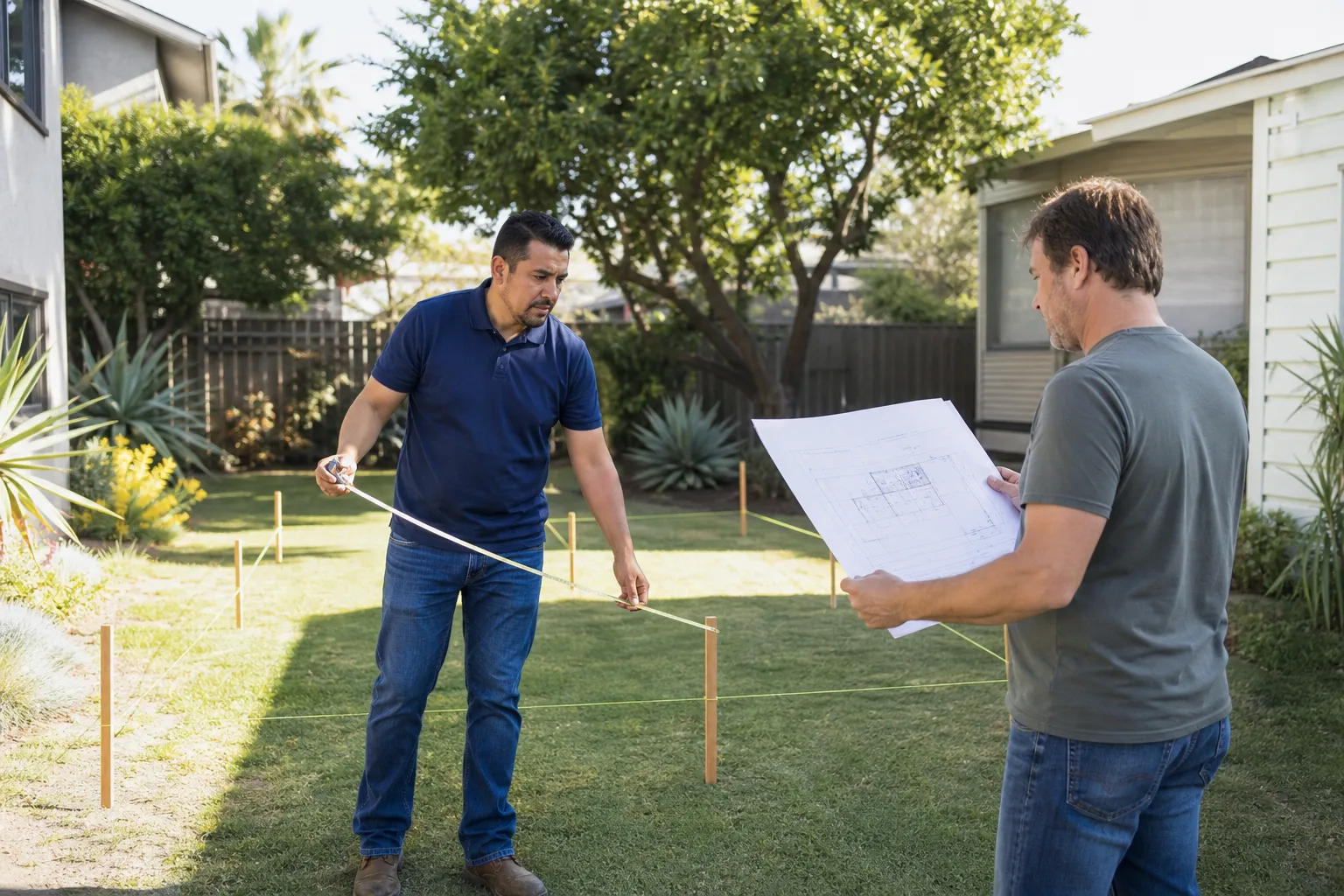
What you can check yourself: locate your sewer cleanout, mark your utility shutoffs, and measure the spot where the Boxabl is going to sit. That information helps any contractor price the job accurately. Beyond that, call (424) 358-3068 and let us look at the lot. Estimates are free, and we will tell you honestly whether your existing prep can be saved or needs to be redone.
FAQs
Plan for 3 to 7 working days for standard pad, trenching, and rough-in work on a typical Torrance lot. Permits add time depending on city review load, but the physical work itself usually moves faster than owners expect. Call (424) 358-3068 and we will give you a realistic schedule in writing.
It depends on what failed. A single bad conduit run can often be re-pulled; a pad that was never compacted to spec usually needs to be dug out and redone, not patched. We will tell you which one you have before we tell you what it costs.
We stock standard utility materials: conduit, ABS, PEX, copper, hold-down hardware, and subpanel components. Nothing on the site prep side is proprietary to Boxabl, which means we do not have to wait on a factory shipment to solve your problem.
No. The price goes in writing before any work starts. If the soil report reveals a condition no one could have seen in advance, we will show you the change in writing before we proceed, not after the invoice arrives.
Written by Reed Calloway, Owner, Fielding ADU Torrance at Fielding ADU Torrance, serving Torrance and nearby areas.