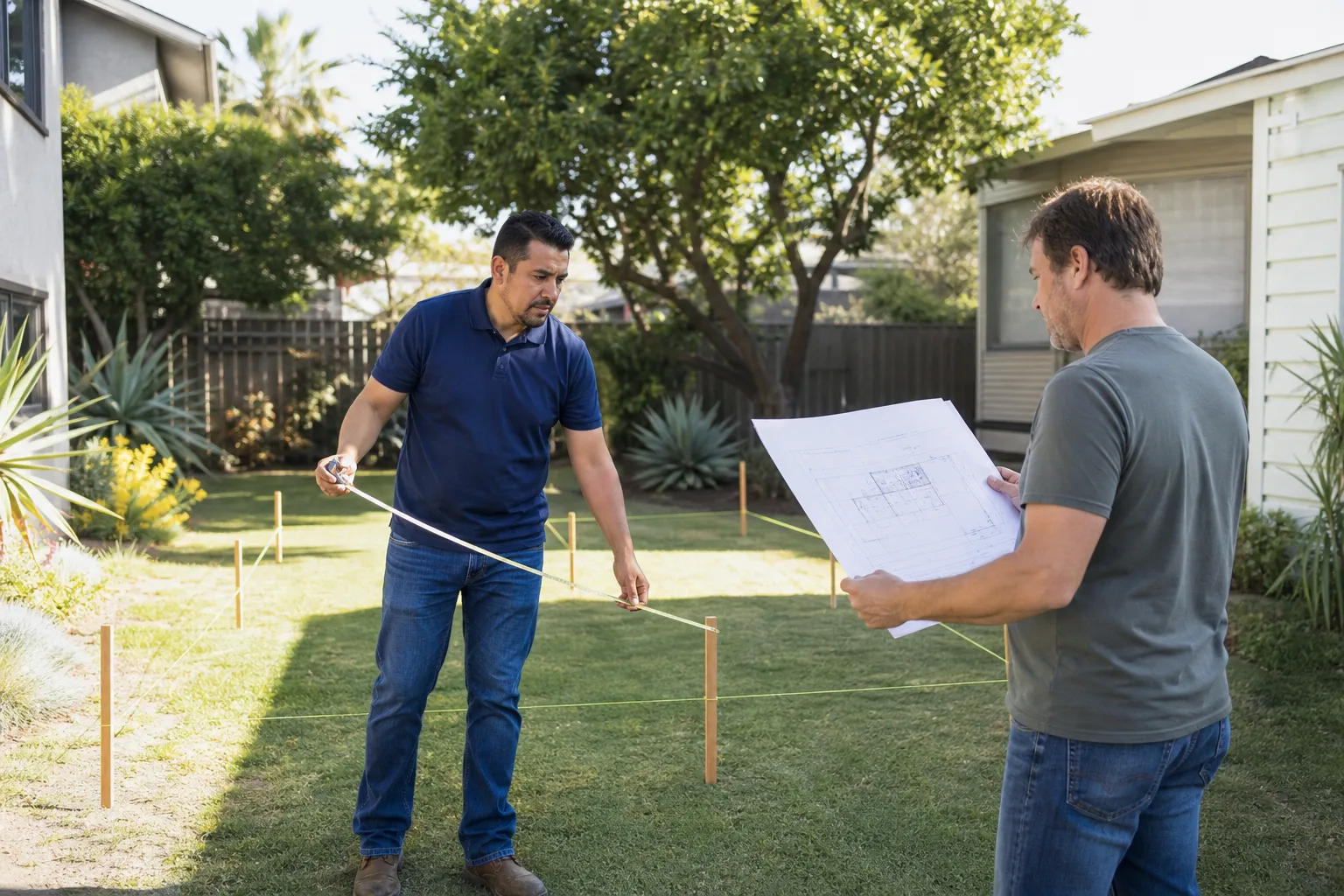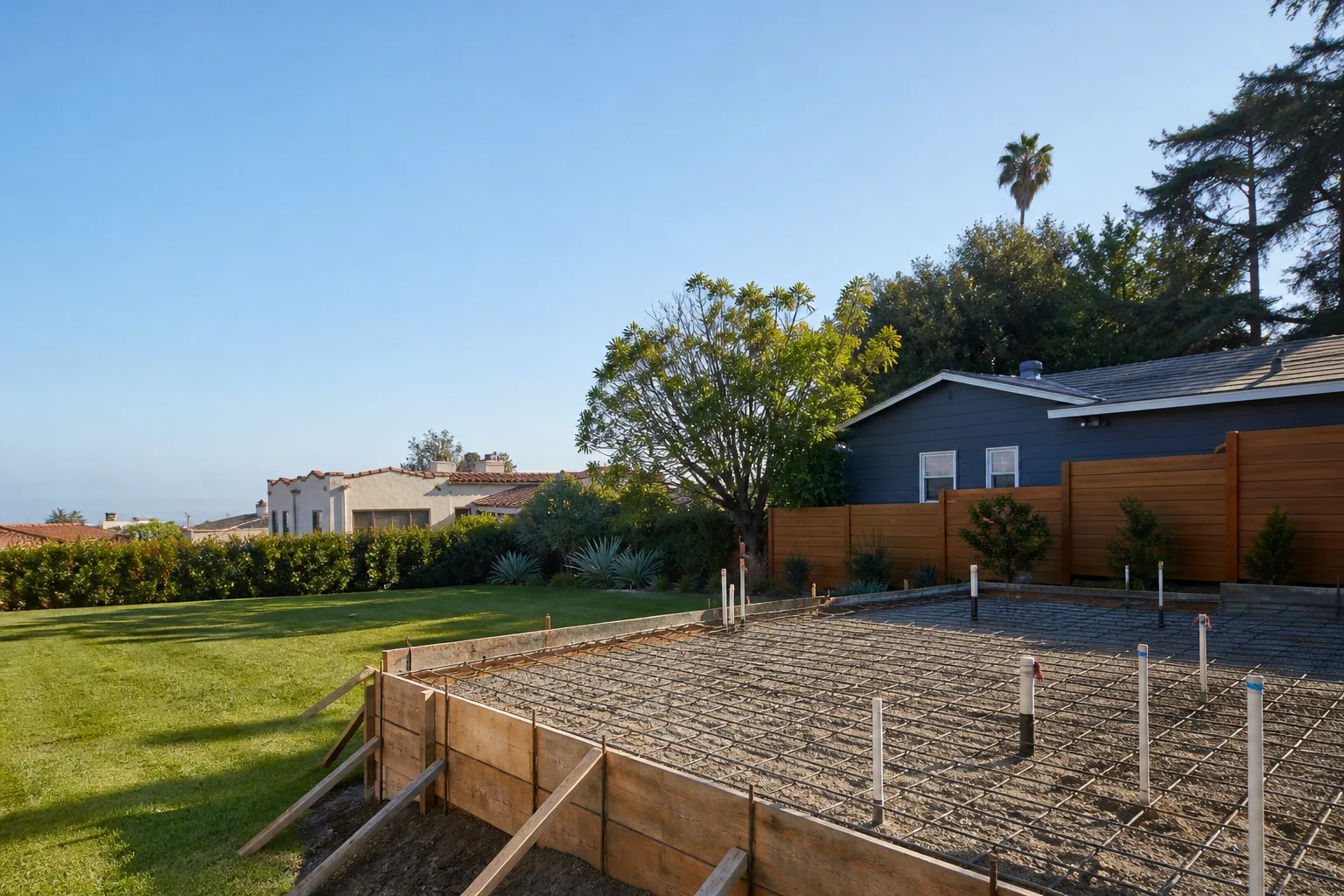
Cover Site Prep & Utilities: The Torrance Owner’s Guide
Site prep and utility work for a Cover unit in Torrance typically runs $12,000 – $28,000 depending on your lot, soil conditions, and how far the nearest sewer, water, and electrical tie-ins sit from your build site. We stock and install the components that fail most often: foundation anchors, utility trenching materials, panel connections, and drainage lines. Most Torrance owners discover a problem during the pre-installation inspection, when the Cover delivery team flags a utility discrepancy, or months after move-in when a trench settles and a line pulls loose.
The symptom picture is usually not dramatic. A driveway cut settles half an inch. A sewer cleanout weeps after heavy rain. The panel trips when the heat pump cycles. Individually these look minor. Together they tell you the site prep under your Cover unit was done to a price, not to the soil and slope conditions in your Torrance neighborhood.
Key Takeaways
- Torrance site prep for Cover units costs $12,000 – $28,000 installed, with utilities driving most of the variance.
- The parts that fail first are trench backfill, panel connections, and drainage lines, not the Cover unit itself.
- Fielding ADU Torrance is an independent service provider. We are not affiliated with Cover. We work on their units because they are well-built; the site work underneath them is what needs scrutiny.
- Reed Calloway and our crew have tied into Torrance utility lines on lots from Old Torrance to the avenues near Wilson Park. We know which inspectors are strict about trench depth and which sidewalk cuts need extra compaction.
Which Cover Models This Applies To
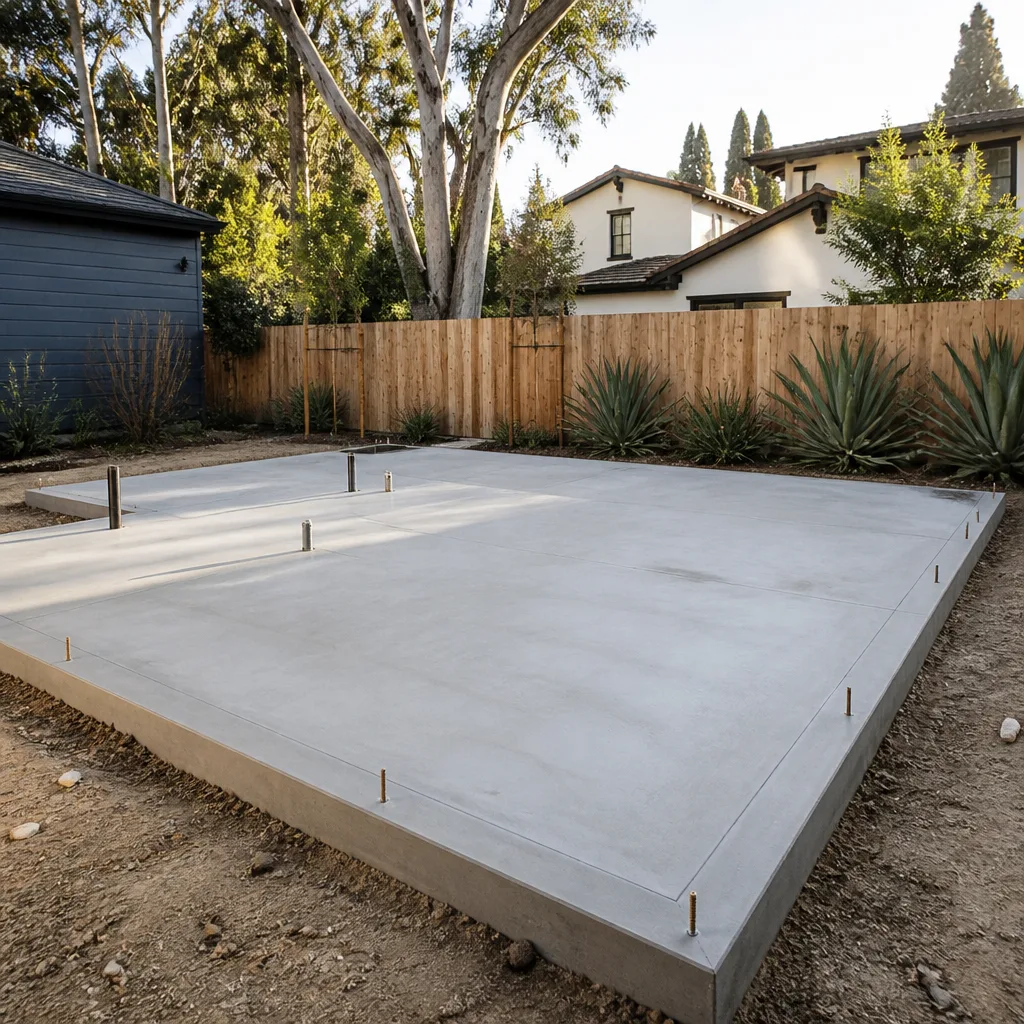
Every Cover unit, from a studio to a two-bedroom, sits on the same kind of site work: foundation pads, utility stubs, drainage, and access clearances. Cover’s site prep requirements are more exact than most prefab platforms because their units arrive as finished modules. The tolerance on a Cover foundation is tighter than for a site-built room addition. If the pad is off by half an inch over 30 feet, the module seams will not close clean.
Identification is straightforward. Your Cover project file includes a site plan with utility point locations, trench depth specs, and the panel load calculation. If you do not have that file, we can pull the required specs from your Cover build documents. The common compatibility gotcha: Cover units ship with specific electrical service requirements, typically a 125-amp subpanel feeder sized for a mini-split heat pump and electric appliances. Older Torrance homes with 100-amp mains often need a main panel upgrade before the Cover subpanel can be fed. That upgrade is part of site prep, and it is the single most common surprise cost we see. Abodu and Dvele units have similar requirements, but Cover’s are particularly strict on load-side separation.
OEM versus aftermarket does not apply the way it does for, say, a garage door spring. Site prep is constructed on-site from concrete, conduit, PVC, and copper. The “parts” are materials and labor, not a catalog item. What matters is spec compliance: the right conduit schedule, the right trench depth for Torrance soil, the right backfill compaction. We use materials that meet or exceed Cover’s published site requirements, and we document it all so your warranty inspection goes clean.
Signs Your Cover Site Prep & Utilities Is Failing
- Settling or cracking at the foundation perimeter. This is usually backfill that was not compacted in lifts. Torrance clay expands when wet and contracts when dry. Poorly compacted backfill shows up within the first two wet winters.
- Water pooling near utility trenches after rain. A trench that was not sloped or backfilled correctly holds water. You will see a soft line across the yard that squishes underfoot, or a driveway cut that dips.
- Breaker trips when the Cover unit’s heat pump cycles. This points to an undersized feeder, a loose connection at the subpanel, or aluminum wiring that was not torqued properly. It is a site prep issue, not a Cover manufacturing defect.
- Sewer cleanout weeping or slow drains inside the unit. A sewer line that was laid with insufficient slope, or that settled and created a belly, will show itself within a year. You will also notice gurgling from fixtures.
- Exposed conduit or utility lines at ground level. If trench depth was shorted during install, erosion and foot traffic will eventually expose lines. That is a code violation in Torrance and a safety hazard.
Replacement Cost & What’s Included
| Scope | Typical Torrance Installed Cost |
|---|---|
| Foundation pad repair (sectional, under module) | $4,000 – $9,000 |
| Main panel upgrade to serve Cover loads | $3,500 – $6,500 |
| Utility trench re-excavation and line repair | $2,500 – $7,000 depending on depth and run |
| Drainage correction (french drain, regrade, or downspout redirection) | $1,800 – $5,000 |
| Sewer lateral repair or replacement | $3,000 – $12,000 including city inspection |
What drives the range, in Torrance specifically, is access. A utility run across a wide Torrance backyard with a clean machine path costs less than a run through a narrow side yard where we hand-dig around an aging gas line. The written price you get from us before any work starts includes materials, labor, equipment, and permit fees by line item. We do not do change orders unless you change the scope. The Garrison Standard backs the work in writing for 365 days. If a trench settles or a connection fails in that year, we come back at no charge and correct it. Put it in writing, then build what it says.
DIY or Call Us?
You can safely check a few things yourself. Walk the trench lines after rain and note where water pools. Look at the panel and see if any breakers feel warm after the heat pump has been running an hour. Pull the cleanout cap and listen for gurgling. None of that requires a tool or a permit.
What you should not do is dig. Torrance utility lines are marked, but hand-digging around a live sewer lateral or an aging gas service line is how homeowners end up with a bigger problem than the one they started with. Electrical work on a subpanel feeder is not a DIY job either. A loose neutral or an undersized feeder is a fire risk, and it will not show itself until something fails. If any of the signs above match what you are seeing, call us at (424) 358-3068. We will send a background-checked crew, put the scope in writing, and tell you honestly whether it is a repair or a full redo before anything gets dug.
FAQs
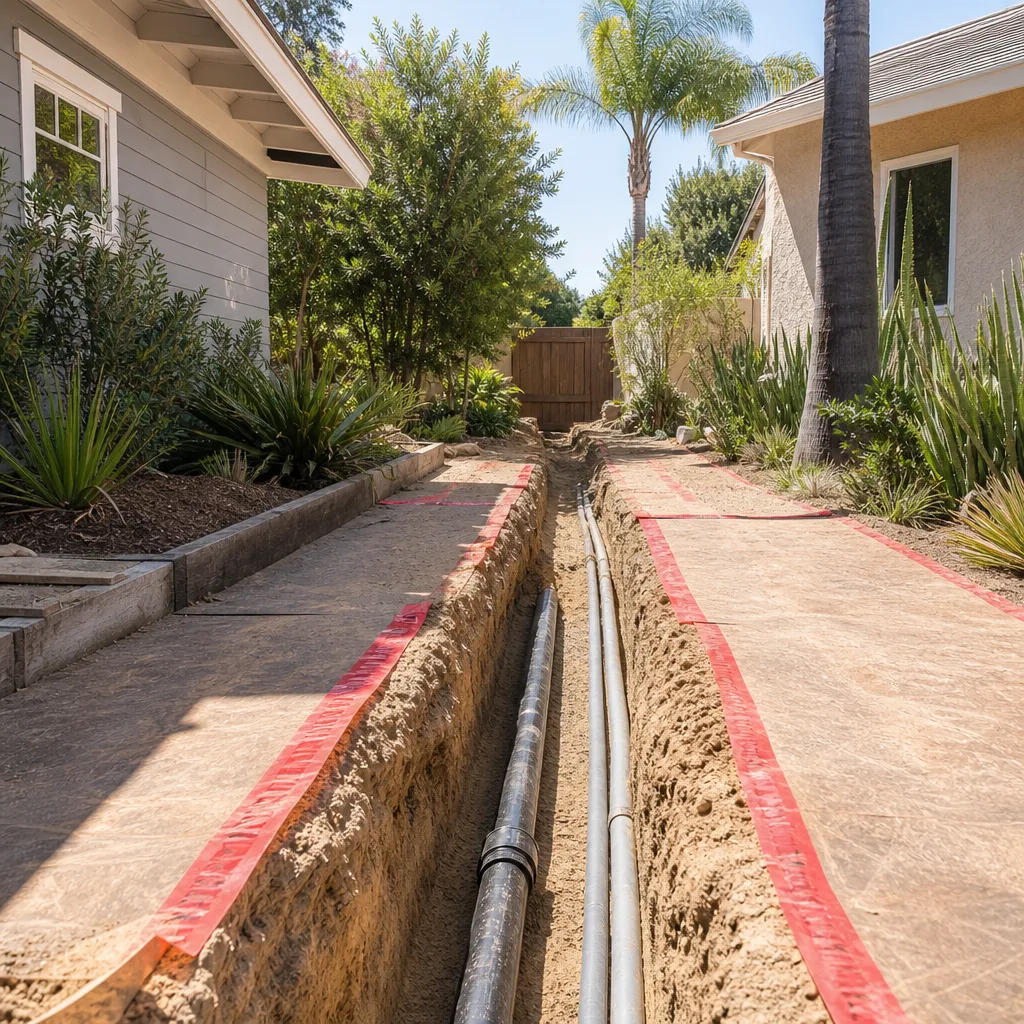
Properly installed site prep should outlast the Cover unit itself; the problem is that most failures we correct happen within the first three years. The Garrison Standard covers our work for 365 days in writing, and we have not had a settlement failure under warranty yet. Call (424) 358-3068 for an assessment and a written estimate.
Sometimes. If the issue is surface settling only, we can often re-slope and re-compact without disturbing the line beneath. If the line itself has separated or bellied, the trench must be re-opened. We will not know which it is until we put a camera down the line and look. The estimate is free, and the answer comes from what we see, not what we hope.
A panel connection or cleanout repair is a one-day job. A full trench re-excavation and line replacement runs three to five days, depending on the length of the run and whether Torrance requires a sidewalk cut. We schedule the inspection ourselves, and you get a calendar date for completion in writing before we start. Call (424) 358-3068 and we will give you a real schedule, not a range.
We stock the common items that fail: conduit fittings, PVC schedule 40 in common sizes, cleanout caps, panel lugs, and torque-spec hardware. For anything unusual, Torrance supply houses carry it same-day. If your failure is urgent, a live person answers at (424) 358-3068 and can tell you what we can get on the truck before noon.
Written by Reed Calloway, Owner, Fielding ADU Torrance at Fielding ADU Torrance, serving Torrance and nearby areas.